Reviewed by David Gibson This is a fine little book that should be in the hands of every pastor and Bible student. At just over one hundred pages long it can be read thoughtfully...
The theme of God subjugating the wicked before the righteous, including Israel’s enemies before Israel, and the New Testament extension of this theme to the blessing of overcomers in Revelation, is a recurring motif...
How a Christian young man should distinguish between personal enemies and God’s enemies, incorporating the biblical theme of divine judgment on the unrighteous, as seen in Psalm 149 and other passages. A nuanced exploration...
“Christianity today is man-centered, not God-centered. God is made to wait patiently, even respectfully, on the whims of men. The image of God currently popular is that of a distracted Father, struggling in heartbroken...
The People’s Obedience 12 Then Zerubbabel the son of Shealtiel, and Joshua the son of Jehozadak, the high priest, with all the remnant of the people, obeyed the voice of the Lord their God, and...
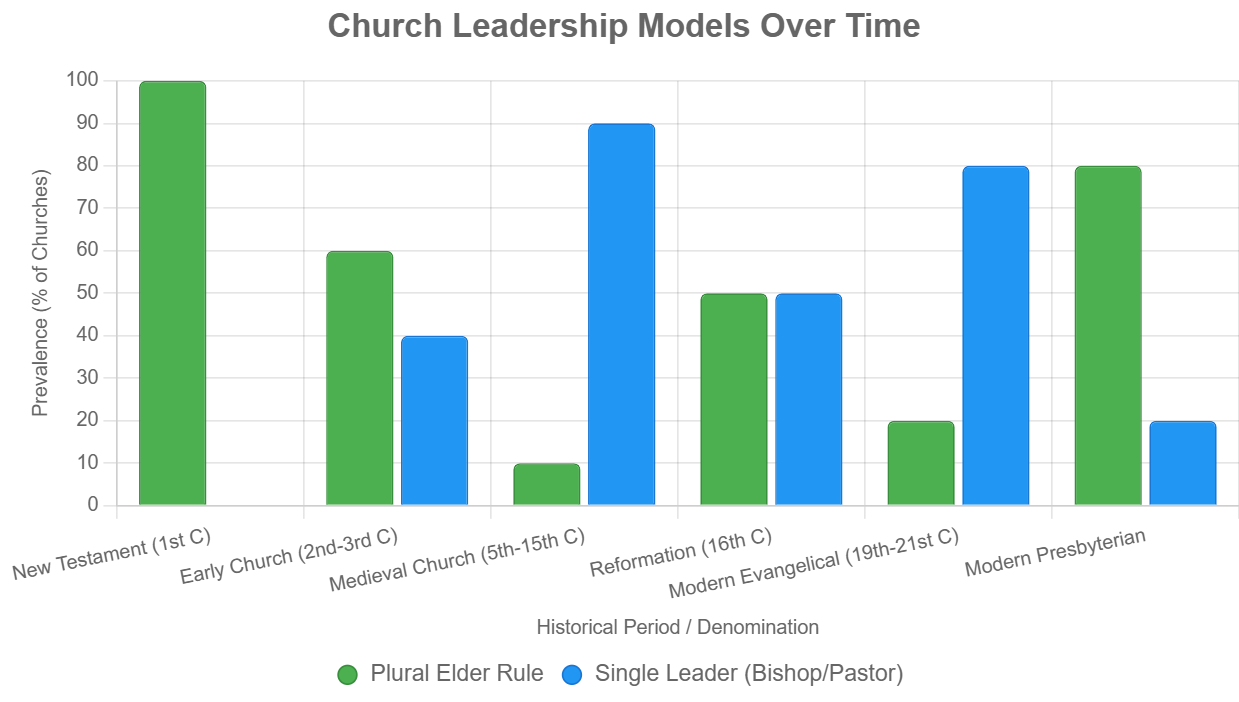
Here is a chart comparing leadership models across key periods and denominations in church history, focusing on the transition from plural elder rule to single-leader (pastor/bishop) models. I’ll also briefly touch on specific denominational...
Many modern churches, particularly non-denominational or contemporary ones, shift away from the traditional “elder” model described in Titus 1:5-16, favoring staff-led or pastor-centric leadership. This can indeed sideline the development of biblical elders. Let’s...
Real Elders? The question of why there seem to be few “real elders” in churches today is multifaceted, involving cultural, societal, and ecclesiastical shifts. The term “real elders” refers to mature, wise, and spiritually...
The terms “Apostles of Christ” and “Apostles of the Church” can be distinguished based on their roles, context, and significance within Christian theology and history. Here’s a breakdown: Apostles of Christ Definition: Refers to...
Context in Orality: In Orality and Literacy, Ong describes how oral cultures favored agonistic, combative styles of communication—think of verbal sparring, riddles, or public debates. This carried into the medieval West, where pre-literate...