 0
0
 0
0
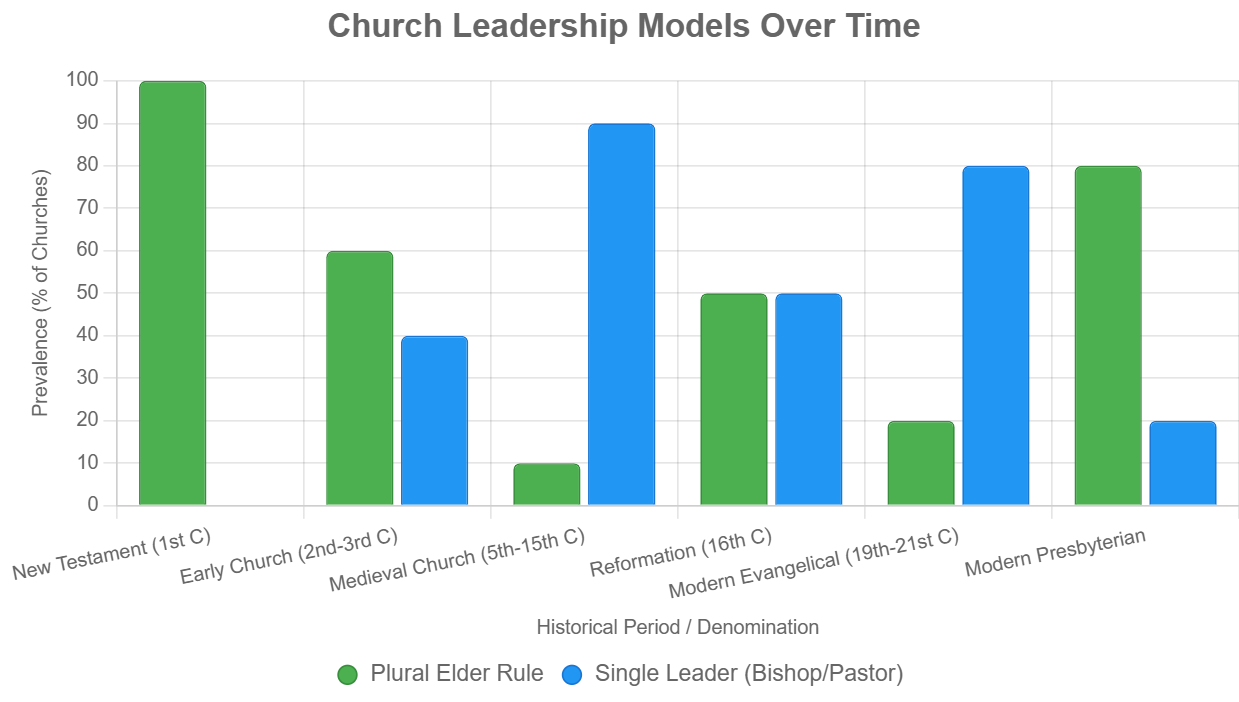
Here is a chart comparing leadership models across key periods and denominations in church history, focusing on the transition from plural elder rule to single-leader (pastor/bishop) models. I’ll also briefly touch on specific denominational practices to give context to how these models play out today.
The problem of one-man leadership (with the rest of the men inevitably abdicating spiritual responsibility ) is very old. The Reformers tried to fix it, but the evangelicals and charismatics fell back into commercial models.
Chart of Leadership Models Across Church History
Below is a chart comparing church leadership models across different eras and traditions, highlighting the shift from plural elder rule to single-leader models and variations in governance.
Notes on the Chart:
- The data represents an estimated prevalence of leadership models based on historical and denominational trends, not precise statistics (as exact numbers are unavailable).
- Plural Elder Rule reflects shared leadership among multiple elders/overseers, as in the New Testament.
- Single Leader includes monarchical bishops, priests, or modern senior pastors with primary authority.
- Colors: Green (#4CAF50) for plural elder rule and blue (#2196F3) for single-leader models to ensure visibility on light/dark themes.
Denominational Practices
Here’s a brief look at how specific denominations handle leadership today, reflecting the legacy of the historical shift from plural elders to single-leader models:
Roman Catholic Church:
-
- Structure: Hierarchical, with a single pope, bishops overseeing dioceses, and priests leading local parishes. The priest functions as the “pastor” of a congregation, subordinate to a bishop.
- Historical Context: Evolved from the 4th-century monarchical episcopate. The plural elder model was replaced by a clear hierarchy by the medieval period.
- Current Practice: The priest is the primary pastoral leader, but ultimate authority rests with the bishop and pope. No plural elder governance at the local level.
Eastern Orthodox Church:
-
- Structure: Similar to Catholicism, with bishops holding significant authority over regional churches and priests leading local parishes. A council of elders (presbyters) may advise, but the bishop or priest is central.
- Historical Context: Retained the early church’s episcopal structure, influenced by Ignatius’ monarchical model.
- Current Practice: Priests act as singular pastors, though synods of bishops reflect a collective governance at higher levels.
Presbyterian Churches:
-
- Structure: Emphasizes plural elder rule, with a session (or presbytery) of elders governing each congregation. A teaching elder (often called a pastor) leads preaching but shares authority with ruling elders.
- Historical Context: Rooted in Calvin’s Reformation model, which sought to restore New Testament elder rule (see Institutes, Book IV).
- Current Practice: Balances plural leadership with a lead pastor, though the pastor’s influence can dominate in practice.
Baptist Churches:
-
- Structure: Varies widely. Many Baptists, especially Southern Baptists, have a single senior pastor with significant authority, supported by deacons or a board of elders. Some, like Reformed Baptists, maintain plural elder governance.
- Historical Context: Influenced by congregationalist models and revivalism, which elevated the pastor’s role.
- Current Practice: Single-pastor models dominate in larger churches, but smaller or Reformed congregations may use plural elders.
Non-Denominational Evangelical Churches:
-
- Structure: Typically led by a senior pastor with a staff team. Elders, if present, often function as advisors rather than co-equal leaders.
- Historical Context: Shaped by 19th–20th-century revivalism and megachurch growth, prioritizing charismatic leadership.
- Current Practice: The senior pastor is the central figure, with “elder boards” often subordinate or symbolic.
Anabaptist and Brethren Churches:
-
- Structure: Emphasize plural leadership, with multiple elders or ministers sharing responsibilities. Some have no designated “pastor” but rotate preaching duties.
- Historical Context: Rooted in the radical Reformation’s rejection of hierarchical models.
- Current Practice: Maintain plural leadership, though some modern congregations adopt a lead pastor for practicality.
Key Observations
- The shift to single-leader models began in the 2nd century (Ignatius’ influence) and solidified by the 4th century with institutionalization under Constantine.
- Reformation movements like Presbyterianism attempted to restore plural elder rule, but cultural and pragmatic factors often led to a dominant pastor role in Protestantism.
- Modern evangelicalism, especially in non-denominational settings, heavily favors the single-pastor model, driven by the need for a visible leader in large congregations.