 0
0
 0
0
Read Time:4 Minute, 2 Second
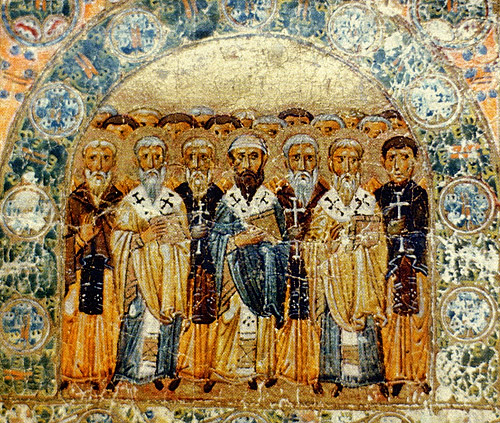
- Context in Orality: In Orality and Literacy, Ong describes how oral cultures favored agonistic, combative styles of communication—think of verbal sparring, riddles, or public debates. This carried into the medieval West, where pre-literate and semi-literate traditions shaped early education. Disputation (disputatio) was a hallmark of medieval scholasticism, a teaching method where scholars publicly debated theses, objections, and counterarguments to refine knowledge and train students.
- Medieval Disputations: These were formal, combative exercises, often held in universities like Paris or Bologna. A master posed a question (e.g., a theological or philosophical issue), students argued pro and con, and the master resolved the dispute. This mirrored the oral, agonistic tone Ong associates with primary orality—lively, adversarial, and performative.
- Modern Perception: Today, we often ridicule these debates, especially the caricature of “how many angels can dance on the head of a pin?” This phrase, not a literal medieval question, became a 17th-century jab at scholasticism’s perceived triviality. Yet, as you note, these exchanges tackled profound issues.
The Angels Debate: Aristotle vs. Avicenna
- Historical Stakes: Medieval debates about angels weren’t frivolous; they were proxies for deep metaphysical questions. Angels, as non-physical beings, raised issues of existence, essence, and the nature of reality. The clash you mention—between Aristotle and Avicenna—reflects a tension between Greek rationalism and Islamic philosophy, mediated by Christian scholastics.
- Aristotle’s View:
- Framework: Aristotle (384–322 BCE) emphasized a physical, empirical world. In his metaphysics, beings exist as substances—combinations of matter and form. Non-material entities (e.g., his “unmoved mover”) exist, but he rejected intermediary realms between the purely physical and the purely divine.
- On Angels: Christian thinkers like Thomas Aquinas adapted Aristotle, seeing angels as pure forms—immaterial, intellectual substances—without need for a hybrid realm. Aristotle’s logic denied a space between body and spirit.
- Avicenna’s View:
- Framework: Avicenna (Ibn Sina, 980–1037), a Persian philosopher, blended Islamic theology with Neoplatonism and Aristotelianism. He posited a cosmology with hierarchies of being—God, intellects (emanations), and the material world.
- The Imaginal World: Avicenna affirmed a “third realm,” a domain of imagination where spiritual realities take perceptible form. This alam al-mithal (world of images) bridges body and spirit, housing angels, visions, and prophetic experiences—neither purely material nor wholly immaterial.
Henri Corbin and the Imaginal World
- Henri Corbin’s Contribution: Corbin (1903–1978), a French philosopher and Islamicist, revived Avicenna’s concept in works like Creative Imagination in the Sufism of Ibn ‘Arabi (1958). He called it the “imaginal world” to distinguish it from the “imaginary” (fantasy). For Corbin:
- Definition: A real, intermediary realm where spiritual truths manifest in symbolic forms—e.g., angels, mystical visions. It’s a space of creative imagination, accessible in dreams, prayer, or revelation.
- Stakes: Corbin saw the medieval angel debates as a battle over this realm’s existence. Avicenna’s affirmation supported mystical traditions (Islamic, Sufi, and esoteric Christian), while Aristotle’s denial aligned with rational, materialist leanings.
- Soul Matters: This wasn’t abstract; it concerned the soul’s nature, its ability to perceive beyond the physical, and the validity of religious experience. Denying the imaginal world risked flattening reality to mere matter or pure spirit.
Fate of the Combative Method
- Medieval Peak: The disputatio thrived in the 12th–15th centuries, training scholars like Aquinas, Duns Scotus, and William of Ockham. It suited a semi-oral culture, per Ong, where memory, rhetoric, and public performance dominated before widespread literacy.
- Decline with Literacy:
- Print’s Rise: Ong argues in Orality and Literacy that the printing press (post-1450) shifted learning from oral, combative dialogue to text-based, linear analysis. Books standardized arguments, reducing the need for live debates.
- Ramus’ Influence: In Ramus, Method, and the Decay of Dialogue, Ong critiques Peter Ramus (1515–1572), whose visual, systematic methods (charts, dichotomies) replaced dialogic teaching with rigid, solitary study. This muted the combative style.
- Enlightenment Shift: By the 17th–18th centuries, rationalism and scientific method favored observation and written treatises over verbal sparring, mocking scholasticism as outdated.
- Modern Fate: The combative method faded in formal education, replaced by lectures, textbooks, and empirical research. We ridicule medieval debates, misunderstanding their depth, as Corbin highlights. Yet traces persist—e.g., in legal arguments, Socratic seminars, or online forums’ verbal jousting, a nod to Ong’s “secondary orality” via digital media.
- Loss and Gain: The decline lost us the dynamic, communal sharpening of ideas, but gained precision and scalability through print and literacy, per Ong’s thesis.
Reflection
The angel debates, far from trivial, wrestled with “fundamental soul matters”—the imaginal world’s existence shaped views on spirituality, human perception, and reality’s structure. Avicenna’s third realm challenged Aristotle’s binary, fueling medieval thought. The combative method, once vital, waned as literacy and print reshaped the West, a shift Ong meticulously traces.


Happy
0 %

Sad
0 %

Excited
0 %

Sleepy
0 %

Angry
0 %

Surprise
0 %