 0
0
 0
0
Read Time:9 Minute, 37 Second
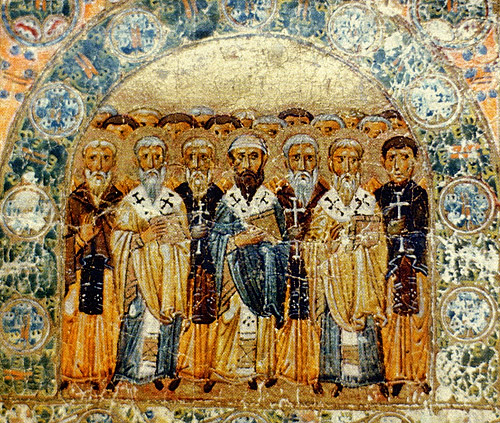
1. First and Second Century Church
Christology
- Affirmed Jesus as divine and human, though formal definitions (e.g., Nicaea, Chalcedon) were later. Early writings (e.g., Ignatius, Justin Martyr) emphasize Christ as the incarnate Logos, Son of God, and savior.
- Focused on Christ’s resurrection and lordship, countering Docetism (denying his humanity) and Ebionism (denying his divinity).
- Eucharist celebrated as a memorial of Christ’s sacrifice, with growing emphasis on his real presence (e.g., Ignatius’ writings).
Soteriology
- Salvation through faith in Christ’s atoning death and resurrection, often linked to repentance and baptism (e.g., Acts 2:38).
- Emphasis on martyrdom and moral living as expressions of faith; works seen as evidence of commitment, not earning salvation.
- No developed doctrine of purgatory or justification; forgiveness tied to repentance and God’s mercy.
Pneumatology
- The Holy Spirit was the divine presence empowering apostles, inspiring prophecy, and guiding the community (e.g., Acts, 1 Corinthians).
- Gifts like tongues and healing were common, seen as signs of God’s kingdom.
- The Spirit’s role in teaching and preserving truth was emphasized (e.g., John 16:13), though Trinitarian formulations were embryonic.
Ecclesiology
- The Church was the community of believers united by faith, baptism, and the Eucharist, led by apostles, then bishops, presbyters, and deacons (e.g., Ignatius’ epistles).
- Emphasized unity under episcopal leadership to counter heresy; apostolic tradition was central (e.g., Irenaeus).
- No centralized authority like later Rome; local churches were autonomous but interconnected through shared faith and letters.
Angelology
- Angels recognized as God’s messengers and servants, active in salvation history (e.g., Gabriel in Luke 1, angels in Acts).
- Viewed as protectors of believers and agents of divine will; demons acknowledged as fallen angels opposing God (e.g., Justin Martyr).
- No systematic doctrine; angels were secondary to Christ’s centrality.
Eschatology
- Strong expectation of Christ’s imminent return (parousia) to judge the living and dead (e.g., 1 Thessalonians 4:16–17).
- Resurrection of the body and eternal life for believers; eternal punishment for the wicked (e.g., Didache).
- Apocalyptic imagery (e.g., Revelation) emphasized cosmic renewal; no detailed millennial views.
2. Roman Catholic Church
Christology
- Affirms the orthodox view of Christ as fully divine and fully human, per the Councils of Nicaea (325) and Chalcedon (451).
- Emphasizes Christ’s role as the incarnate Son of God, second person of the Trinity, and mediator between God and humanity.
- Highlights the real presence of Christ in the Eucharist (transubstantiation), where bread and wine become Christ’s body and blood.
Soteriology
- Salvation involves faith, good works, and participation in sacraments (e.g., Baptism, Eucharist, Penance).
- Grace is mediated through the Church and sacraments; justification is a transformative process (infusion of grace).
- Purgatory purifies venial sins post-death; indulgences may reduce purgatorial time.
Pneumatology
- The Holy Spirit proceeds from the Father and the Son (Filioque clause).
- The Spirit sanctifies through sacraments, guides the Church’s magisterium, and inspires believers.
- Emphasizes the Spirit’s role in Church unity and apostolic succession.
Ecclesiology
- The Church is the mystical body of Christ, with the Pope as the Vicar of Christ and successor of Peter.
- Apostolic succession ensures continuity through bishops.
- The Church is necessary for salvation, dispensing grace via sacraments; extra Ecclesiam nulla salus is nuanced for non-Catholics.
Angelology
- Angels are created spiritual beings, serving as God’s messengers and guardians (e.g., guardian angels).
- Hierarchy of angels (e.g., seraphim, cherubim) based on tradition (e.g., Dionysius the Areopagite).
- Demons are fallen angels; spiritual warfare acknowledged, with exorcisms practiced.
Eschatology
- Christ’s second coming will usher in the final judgment, resurrection of the dead, and new creation.
- Amillennial view: the Kingdom of God is present in the Church; no literal 1,000-year reign.
- Heaven, hell, and purgatory; particular judgment at death, final judgment at the end.
3. Reformed Churches
Christology
- Affirms Chalcedonian Christology: Christ is fully divine and human, one person with two natures.
- Emphasizes Christ’s role as sole mediator and head of the Church, focusing on his atoning work.
- Rejects transubstantiation, viewing Christ as spiritually present in the Lord’s Supper (sacramental union).
Soteriology
- Salvation is by grace alone (sola gratia) through faith alone (sola fide), based on Christ’s penal substitution.
- Adheres to TULIP: total depravity, unconditional election, limited atonement, irresistible grace, perseverance of the saints.
- Good works are the fruit of faith, not a means to salvation.
Pneumatology
- The Holy Spirit regenerates believers, enabling faith and sanctification.
- The Spirit illuminates Scripture (sola scriptura) and applies Christ’s redemption inwardly.
- Less emphasis on visible manifestations compared to Pentecostal/Charismatic traditions.
Ecclesiology
- The Church is the covenant community of the elect, both visible (local congregations) and invisible (all true believers).
- Governance is presbyterian or congregational, with elders overseeing doctrine.
- Sacraments (Baptism, Lord’s Supper) are signs of God’s covenant, not salvific.
Angelology
- Angels are God’s created servants, ministering to the elect (e.g., Hebrews 1:14).
- Demons are fallen angels under Satan’s leadership, opposing God’s purposes.
- Emphasis on Christ’s sovereignty over all spiritual beings; angelology is not central.
Eschatology
- Typically amillennial or postmillennial: the Kingdom is present or growing through the Church; no literal millennium.
- Christ’s return brings final judgment, resurrection, and new heavens and earth.
- Heaven and hell as eternal destinies; no purgatory.
4. Evangelical Churches
Christology
- Affirms orthodox Christology: Jesus is fully God and fully man, second person of the Trinity.
- Emphasizes Christ’s substitutionary atonement and resurrection as central to salvation.
- Focuses on a “personal relationship” with Jesus.
Soteriology
- Salvation is by grace through faith alone, often via a decisive conversion (“born again”).
- Rejects works-based salvation; sanctification and obedience evidence true faith.
- Views vary on eternal security (some affirm “once saved, always saved”).
Pneumatology
- The Holy Spirit convicts, regenerates, and empowers Christian living.
- Emphasizes the Spirit’s role in illuminating Scripture and guiding decisions.
- Less focus on charismatic gifts, though some Evangelicals are open to them.
Ecclesiology
- The Church is the body of believers united by faith, with a focus on local congregations.
- Governance varies (congregational, elder-led, denominational).
- Sacraments/ordinances (Baptism, Lord’s Supper) are symbolic, emphasizing preaching and evangelism.
Angelology
- Angels are God’s messengers and protectors of believers; demons are fallen angels engaged in spiritual warfare.
- Some emphasize angelic/demonic activity in missions or personal life (e.g., spiritual warfare prayers).
- Views vary, with less systematic focus than Catholic/Orthodox traditions.
Eschatology
- Often premillennial, expecting Christ’s return to establish a literal 1,000-year reign (especially dispensationalists).
- Rapture, tribulation, and final judgment are common themes; some hold amillennial or postmillennial views.
- Eternal heaven and hell; emphasis on evangelism due to urgency of Christ’s return.
5. Pentecostal Churches
Christology
- Affirms orthodox Christology: Christ is fully divine and human, second person of the Trinity.
- Emphasizes Christ as the baptizer in the Holy Spirit, empowering believers.
- Some Oneness Pentecostals hold a modalist view, rejecting the Trinity.
Soteriology
- Salvation is by grace through faith, often with a crisis conversion experience.
- Many require a second work of grace, “baptism in the Holy Spirit,” evidenced by tongues.
- Sanctification may be a distinct experience; holiness is emphasized.
Pneumatology
- The Holy Spirit empowers believers with gifts (tongues, prophecy, healing) for today.
- Baptism in the Spirit is a post-conversion experience, often normative.
- The Spirit inspires dynamic worship and divine encounters.
Ecclesiology
- The Church is the Spirit-empowered community, often with congregational or episcopal governance.
- Emphasis on vibrant worship, spiritual gifts, and evangelism; churches are autonomous or loosely denominational.
- Baptism and Lord’s Supper are practiced, but spiritual experience is prioritized.
Angelology
- Angels are active in God’s plan, aiding believers and delivering divine messages.
- Strong emphasis on spiritual warfare against demons, often linked to deliverance ministries.
- Angelic/demonic encounters may be reported in charismatic worship or missions.
Eschatology
- Typically premillennial, with a focus on Christ’s imminent return, rapture, and tribulation.
- Emphasis on signs of the end times (e.g., revival, spiritual gifts) as evidence of the last days.
- Heaven and hell as eternal destinies; urgency in evangelism and holiness.
6. Eastern Orthodox Church
Christology
- Affirms Chalcedonian Christology: Christ is fully divine and fully human, one person with two natures.
- Emphasizes the incarnation as the central act of salvation, uniting divinity and humanity.
- Views Christ as mystically present in the Eucharist (real presence, without transubstantiation).
Soteriology
- Salvation is theosis (divinization), becoming partakers of the divine nature through grace.
- Involves faith, sacraments, and ascetic practices; synergistic cooperation with God’s grace.
- No concept of purgatory; prayers for the dead aid their journey toward God.
Pneumatology
- The Holy Spirit proceeds from the Father alone (rejects Filioque).
- The Spirit sanctifies through the sacraments (mysteries), guides the Church, and deifies believers.
- Emphasizes the Spirit’s role in tradition and conciliarity (councils).
Ecclesiology
- The Church is the body of Christ, preserved in apostolic succession and the seven ecumenical councils.
- Governance is conciliar, with patriarchs and bishops; no single supreme leader like the Pope.
- The Church is the ark of salvation, with sacraments (e.g., Baptism, Chrismation, Eucharist) essential for theosis.
Angelology
- Angels are spiritual beings created by God, serving as messengers and intercessors (e.g., in liturgy, icons).
- Detailed hierarchy of angels (e.g., nine ranks in Dionysius’ Celestial Hierarchy); demons are fallen angels.
- Angels are venerated in worship and seen as protectors of individuals and churches.
Eschatology
- Amillennial: the Kingdom of God is present in the Church; no literal millennium.
- Christ’s return brings resurrection, final judgment, and the new creation.
- Heaven and hell as states of communion with or separation from God; prayers for the dead reflect hope in God’s mercy.
7. Charismatic Churches
Christology
- Aligns with orthodox Christology: Jesus is fully God and fully human, second person of the Trinity.
- Emphasizes Christ’s ongoing ministry through the Spirit, including miracles and healing.
- Views Christ as actively present in worship and personal experience.
Soteriology
- Salvation is by grace through faith, with a focus on personal conversion and renewal.
- Some emphasize a “Spirit-filled” life post-conversion, though tongues are not always required.
- Sanctification is progressive, emphasizing victorious living.
Pneumatology
- The Holy Spirit bestows gifts (tongues, prophecy, healing) for today, available to all believers.
- Baptism in the Spirit enhances empowerment, often without requiring tongues.
- The Spirit fosters experiential worship and personal guidance.
Ecclesiology
- The Church is the Spirit-filled body of Christ, often transcending denominations.
- Governance varies (denominational to independent); emphasis on Spirit-led leadership.
- Sacraments/ordinances are practiced but secondary to spiritual gifts and worship.
Angelology
- Angels are God’s agents, protecting believers and aiding in spiritual battles.
- Demons are active adversaries; spiritual warfare is emphasized, often with deliverance practices.
- Angelic encounters may be reported in worship or personal testimonies.
Eschatology
- Often premillennial, expecting Christ’s return, rapture, and tribulation; some adopt amillennial views.
- Emphasis on end-time revival and spiritual gifts as signs of the last days.
- Heaven and hell as eternal realities; focus on readiness for Christ’s return.
Notes
- Diversity: Each denomination has variations (e.g., Oneness Pentecostals, progressive Evangelicals, jurisdictional differences in Orthodoxy). The First and Second Century Church lacked formal creeds but laid foundations for later doctrines, including angelology and eschatology.
- Overlap: Early Church shares experiential elements with Pentecostals/Charismatics and apostolic tradition with Catholics/Orthodox. Evangelicals, Pentecostals, and Charismatics emphasize personal faith and eschatological urgency; Reformed, Catholic, and Orthodox stress tradition or sacraments.
- Sources: Based on theological texts (e.g., Catholic Catechism, Orthodox writings like On the Incarnation by Athanasius, Westminster Confession), early Church writings (e.g., Ignatius, Irenaeus, Justin Martyr, Didache), denominational statements, and scholarly summaries. No X posts or web searches were needed.


Happy
0 %

Sad
0 %

Excited
0 %

Sleepy
0 %

Angry
0 %

Surprise
0 %