 0
0
 0
0
God’s redemptive purpose of revealing Christ through church history can be traced across key periods, showing a continuous thread of divine revelation, human response, and the spread of the Gospel. This overview highlights how Christ’s centrality was progressively unveiled, preserved, and proclaimed, drawing on major historical developments:
- Apostolic Era (30–100 AD): Foundation of the Church
- Christ Revealed: Jesus’ life, death, and resurrection fulfilled Old Testament prophecies (e.g., Isaiah 53, Psalm 22). The apostles, empowered by the Holy Spirit at Pentecost (Acts 2), proclaimed Christ as the promised Messiah and risen Lord.
- Key Developments:
- The New Testament writings (Gospels, Epistles, Revelation) codified Christ’s teachings and redemptive work.
- Early Christian communities formed, emphasizing baptism, the Lord’s Supper, and Christ’s imminent return.
- Persecution (e.g., Nero, 64 AD) tested the church, yet the Gospel spread across the Roman Empire (Acts 1:8).
- Redemptive Purpose: Christ was established as the cornerstone of salvation, with the apostles laying the doctrinal foundation (Ephesians 2:20).
- Patristic Period (100–500 AD): Defending and Defining Christ
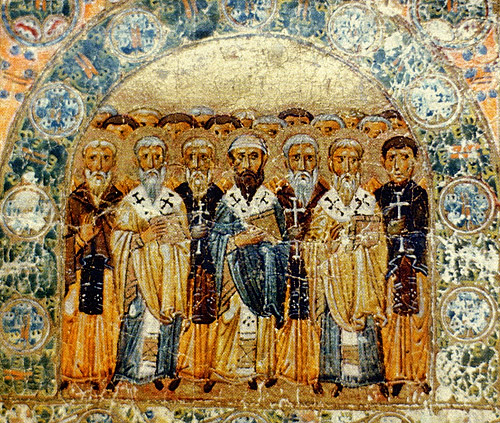
- Christ Revealed: The church clarified Christ’s nature against heresies (e.g., Gnosticism, Arianism) through creeds and councils.
- Key Developments:
- Apologists like Justin Martyr (c. 100–165) defended Christ’s divinity and humanity.
- Councils of Nicaea (325) and Chalcedon (451) affirmed Christ as fully God and fully man, countering Arianism and Nestorianism.
- Church Fathers (e.g., Augustine) articulated salvation through Christ’s atonement, emphasizing grace (Romans 5:8).
- Martyrdom (e.g., Polycarp, c. 155) testified to Christ’s worth.
- Redemptive Purpose: Christ’s identity as Savior was safeguarded, ensuring the Gospel’s integrity amid philosophical and cultural challenges.
- Medieval Period (500–1500 AD): Institutionalization and Devotion
- Christ Revealed: Christ’s redemptive work was central in sacraments, theology, and art, though sometimes obscured by institutional corruption.
- Key Developments:
- Monastic movements (e.g., Benedict, 6th century) preserved Scripture and fostered devotion to Christ.
- Scholastics like Thomas Aquinas (13th century) systematized theology, emphasizing Christ’s role in salvation.
- The Crusades (1095–1291) and indulgences distorted Christ’s message, yet mystics like Julian of Norwich (14th century) refocused on Christ’s love and sacrifice.
- The Great Schism (1054) divided East and West, but both upheld Christ’s centrality in liturgy.
- Redemptive Purpose: Despite errors, Christ’s redemptive work was proclaimed through sacraments and personal piety, sustaining faith across cultures.
- Reformation and Counter-Reformation (1500–1700 AD): Rediscovering Christ
- Christ Revealed: The Reformation reemphasized salvation by grace through faith in Christ alone (sola fide, sola scriptura).
- Key Developments:
- Martin Luther (1517) and John Calvin clarified justification by faith, pointing to Christ’s finished work (Romans 3:24).
- The Catholic Counter-Reformation (Council of Trent, 1545–1563) reaffirmed Christ’s role in sacraments while defending tradition.
- Bible translations (e.g., Tyndale, Luther) made Christ’s teachings accessible, spreading the Gospel.
- Persecutions and wars (e.g., Thirty Years’ War) showed the cost of proclaiming Christ.
- Redemptive Purpose: Christ’s sufficiency for salvation was restored as the church refocused on Scripture and personal faith.
- Modern Period (1700–Present): Global Witness and Challenges
- Christ Revealed: The church expanded globally, proclaiming Christ amid enlightenment skepticism, secularism, and pluralism.
- Key Developments:
- Revivals (e.g., Great Awakening, 1730s–1740s) and missionaries (e.g., William Carey, 18th century) spread Christ’s Gospel worldwide.
- Theologians like Karl Barth (20th century) reasserted Christ’s centrality against liberalism, emphasizing the “Word made flesh” (John 1:14).
- Vatican II (1962–1965) renewed Catholic focus on Christ in liturgy and mission.
- Persecution (e.g., in communist regimes) and cultural shifts (e.g., postmodernism) challenged the church, yet Christ-centered movements (e.g., evangelicalism) grew.
- Redemptive Purpose: Christ’s universal call to salvation was proclaimed globally, with the church adapting to new contexts while upholding the Gospel.
Common Threads Across History
- Scripture: The Bible consistently revealed Christ as the fulfillment of God’s redemptive plan (Luke 24:27).
- Worship and Sacraments: Baptism and the Eucharist pointed to Christ’s death and resurrection.
- Persecution and Martyrdom: Believers’ faithfulness under trial witnessed to Christ’s worth (Revelation 12:11).
- Theological Clarity: Debates and creeds refined the church’s understanding of Christ’s nature and work.
- Mission: The Gospel’s spread fulfilled Christ’s command to make disciples (Matthew 28:19).
Conclusion
God’s redemptive purpose of revealing Christ unfolded through the church’s proclamation, defense, and embodiment of the Gospel. From apostolic witness to global mission, Christ remained the focal point of salvation history, with the Holy Spirit guiding the church through challenges to uphold His truth. Each era, despite flaws, advanced God’s plan to make Christ known, culminating in a global church that continues to proclaim Him until His return.
If you’d like a deeper dive into a specific period or figure, let me know!